YK Circular Vibrating Screen
High-Capacity Classification for Aggregate & Mining
Designed for high-capacity classification of quarry aggregate, mining ore, and construction waste, the SUNREX YK Series circular vibrating screen uses a dedicated vibrator motor with high amplitude and adjustable frequency to deliver consistent, efficient screening across 23 models spanning 2 to 4 decks and capacities from 10 to 800 t/h.
How the YK Circular Vibrating Screen Works
Dedicated Vibrator Motor — High Amplitude, Adjustable Frequency
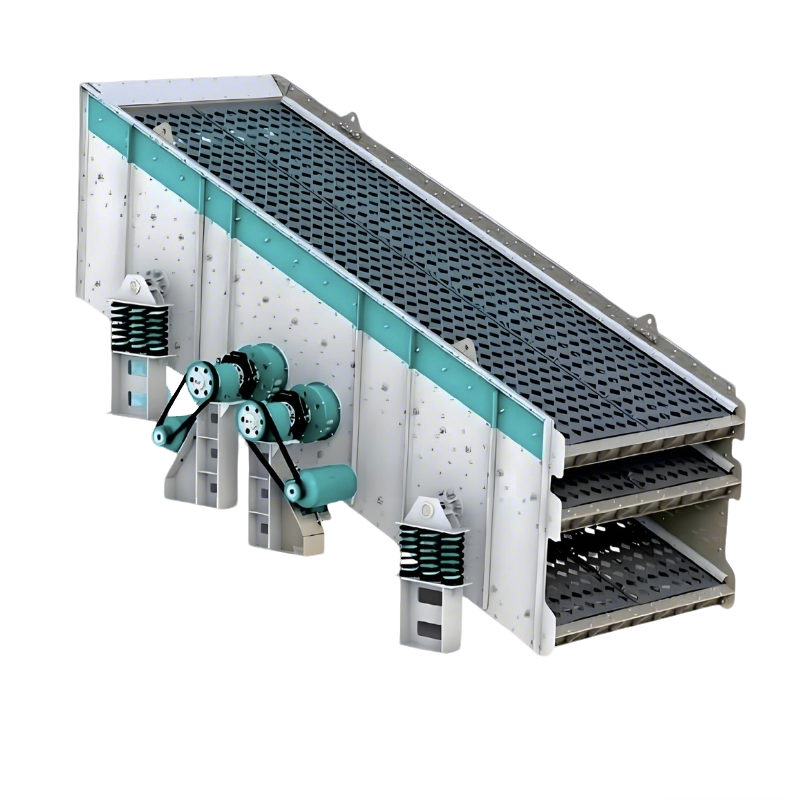
The YK Series uses a dedicated vibrator motor mounted on the screen frame. When the motor rotates, it generates a circular exciting force that causes the screen box to vibrate in a uniform elliptical motion. This vibration throws material upward and forward at a controlled angle, allowing undersize particles to pass through the screen apertures while oversize material travels along the deck and discharges at the end. The dedicated vibrator design eliminates the need for shafts, universal joints, and complex drivetrains — reducing mechanical failure points, simplifying maintenance, and enabling quick amplitude adjustment by changing the motor's eccentric weight configuration.
Dedicated Vibrator Motor
Direct-drive vibrator motor eliminates shafts and universal joints, reducing mechanical failure points and simplifying maintenance compared to traditional shaft-driven screens.
Adjustable Amplitude & Frequency
Eccentric weight configuration on the vibrator allows quick amplitude adjustment to match material characteristics — higher amplitude for coarse feed, lower for fine or sticky material.
Circular Throw Motion
Uniform elliptical throw throws material forward at the optimal screening angle, maximising the probability of particles passing through apertures on the first contact — key for high-capacity classification.
Polyurethane / Rubber Screen Cloths
Replaceable modular screen panels in polyurethane or rubber resist abrasion and moisture, reduce blinding on wet feed, and can be swapped without tools for faster changeovers.
Quarry Aggregate Classification
Separates crushed stone into multiple finished product fractions — 5–10 mm, 10–20 mm, 20–31.5 mm, and oversize — in a single screening pass to meet standard gradation specifications.
Mining Ore Grading
Grades run-of-mine or crushed ore into size fractions for gravity concentration, flotation feed preparation, or stockpiling — ensuring consistent feed quality for downstream processing circuits.
Construction Waste Screening
Screens crushed demolition rubble to separate reusable granular material from oversize concrete and masonry prior to washing, magnetic separation, and air classification stages.
Closed-Circuit Crushing Support
Positioned after primary or secondary crushers to scalp off finished product and return oversize to the crusher — the essential classification step for producing clean, saleable aggregate fractions.
Versatile Screening Across Quarry, Mining, and Recycling Operations
The YK Series is the standard classification screen for aggregate production lines — separating crushed stone into multiple finished product fractions in a single pass. In mining, it grades ore into size fractions for gravity separation, flotation feed preparation, or stockpiling by grade. In construction and demolition waste recycling, it separates oversize rubble from reusable granular material prior to washing and density separation. The YK screen handles feed sizes up to 200 mm and operates reliably on dry or pre-dewatered material across all these applications.
YK Series — Full Specifications
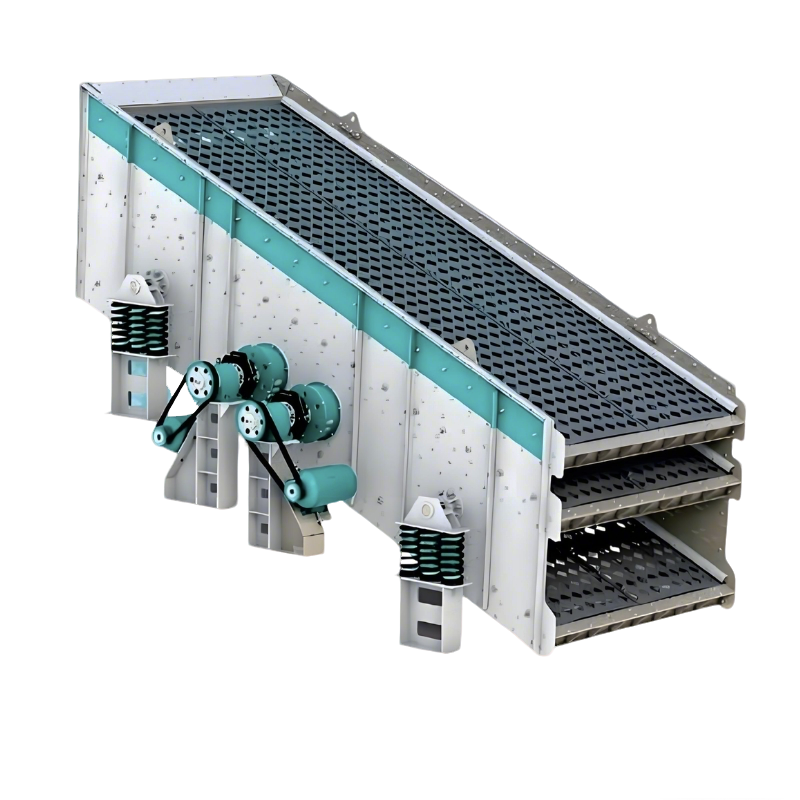
23 models from compact 2YK1237 to large-format 3YK3675. 2-deck, 3-deck, and 4-deck configurations. All models use a dedicated vibrator motor with adjustable amplitude and frequency.
| Model | Screen Size (mm) | Decks | Aperture (mm) | Max Feed (mm) | Capacity (t/h) | Power (kW) | Frequency (rpm) | Amplitude (mm) |
|---|---|---|---|---|---|---|---|---|
| 2YK1237 | 3700×1200 | 2 | 3–80 | 100 | 10–80 | 11 | 750–950 | 6–9 |
| 3YK1237 | 3700×1200 | 3 | 3–80 | 100 | 10–80 | 11 | 750–950 | 6–9 |
| 2YK1548 | 4800×1500 | 2 | 3–80 | 100 | 30–200 | 15 | 750–950 | 6–9 |
| 3YK1548 | 4800×1500 | 3 | 3–80 | 100 | 30–200 | 15 | 750–950 | 6–9 |
| 4YK1548 | 4800×1500 | 4 | 3–80 | 100 | 30–200 | 15 | 750–950 | 6–9 |
| 2YK1848 | 4800×1800 | 2 | 3–80 | 200 | 50–250 | 22 | 750–950 | 6–9 |
| 3YK1848 | 4800×1800 | 3 | 3–80 | 200 | 50–250 | 22 | 750–950 | 6–9 |
| 2YK1860 | 6000×1800 | 2 | 3–80 | 200 | 60–300 | 30 | 750–950 | 6–9 |
| 3YK1860 | 6000×1800 | 3 | 3–80 | 200 | 60–300 | 30 | 750–950 | 6–9 |
| 4YK1860 | 6000×1800 | 4 | 3–80 | 200 | 60–300 | 30 | 750–950 | 6–9 |
| 2YK2160 | 6000×2100 | 2 | 3–80 | 200 | 80–400 | 30 | 650–850 | 6–9 |
| 3YK2160 | 6000×2100 | 3 | 3–80 | 200 | 80–400 | 37 | 650–850 | 6–9 |
| 4YK2160 | 6000×2100 | 4 | 3–80 | 200 | 80–400 | 37 | 650–850 | 6–9 |
| 2YK2460 | 6000×2400 | 2 | 3–80 | 200 | 100–500 | 37 | 750–950 | 6–9 |
| 3YK2460 | 6000×2400 | 3 | 3–80 | 200 | 100–500 | 37 | 750–950 | 6–9 |
| 4YK2460 | 6000×2400 | 4 | 3–80 | 200 | 100–500 | 37 | 750–950 | 6–9 |
| 2YK2870 | 7000×2800 | 2 | 3–80 | 200 | 100–700 | 2×30 | 650–850 | 6–9 |
| 3YK2870 | 7000×2800 | 3 | 3–80 | 200 | 100–700 | 2×37 | 650–850 | 6–9 |
| 4YK2870 | 7000×2800 | 4 | 3–80 | 200 | 100–700 | 2×37 | 650–850 | 6–9 |
| 2YK3075 | 7500×3000 | 2 | 3–80 | 200 | 150–800 | 2×30 | 650–850 | 6–9 |
| 3YK3075 | 7500×3000 | 3 | 3–80 | 200 | 150–800 | 2×37 | 650–850 | 6–9 |
| 2YK3675 | 7500×3600 | 2 | 3–80 | 200 | 150–800 | 2×30 | 650–850 | 6–9 |
| 3YK3675 | 7500×3600 | 3 | 3–80 | 200 | 150–800 | 2×37 | 650–850 | 6–9 |
Where YK Vibrating Screens Deliver Results
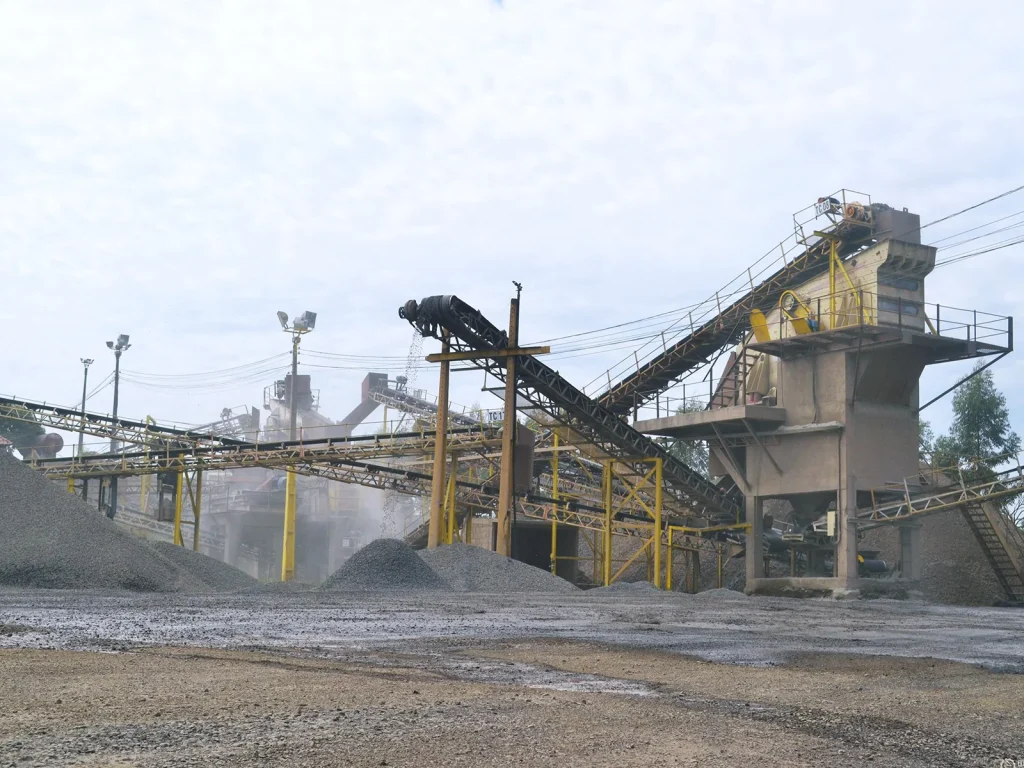
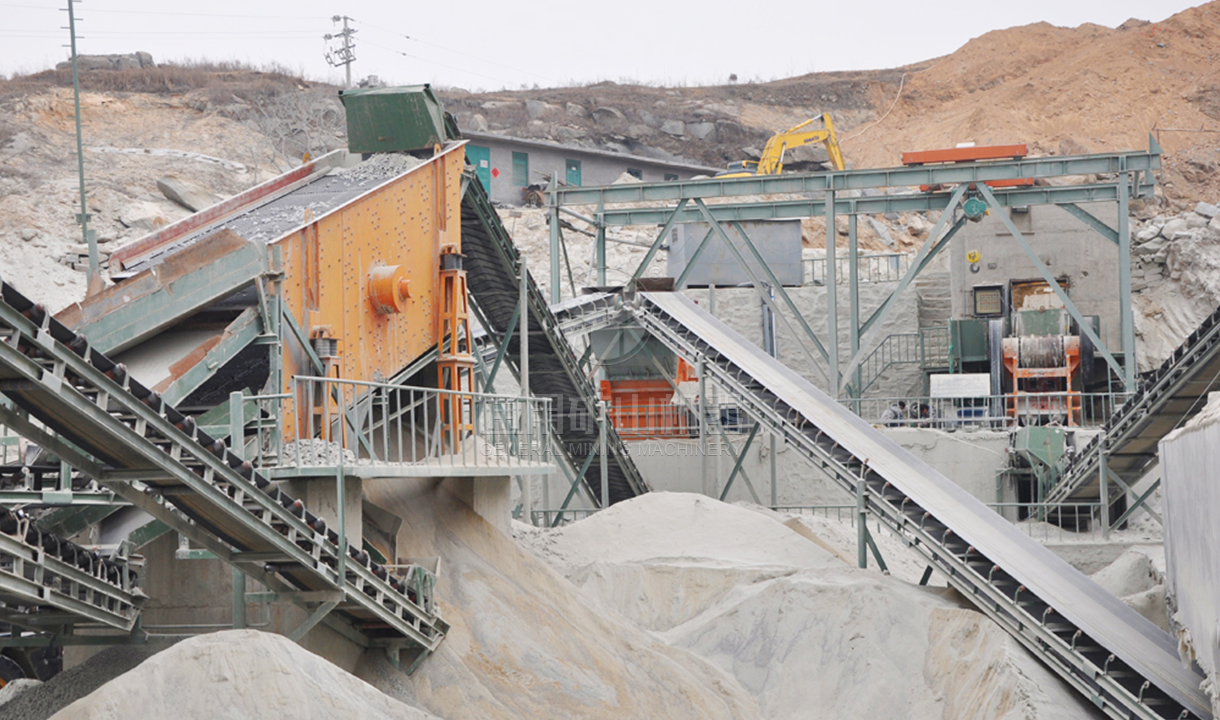
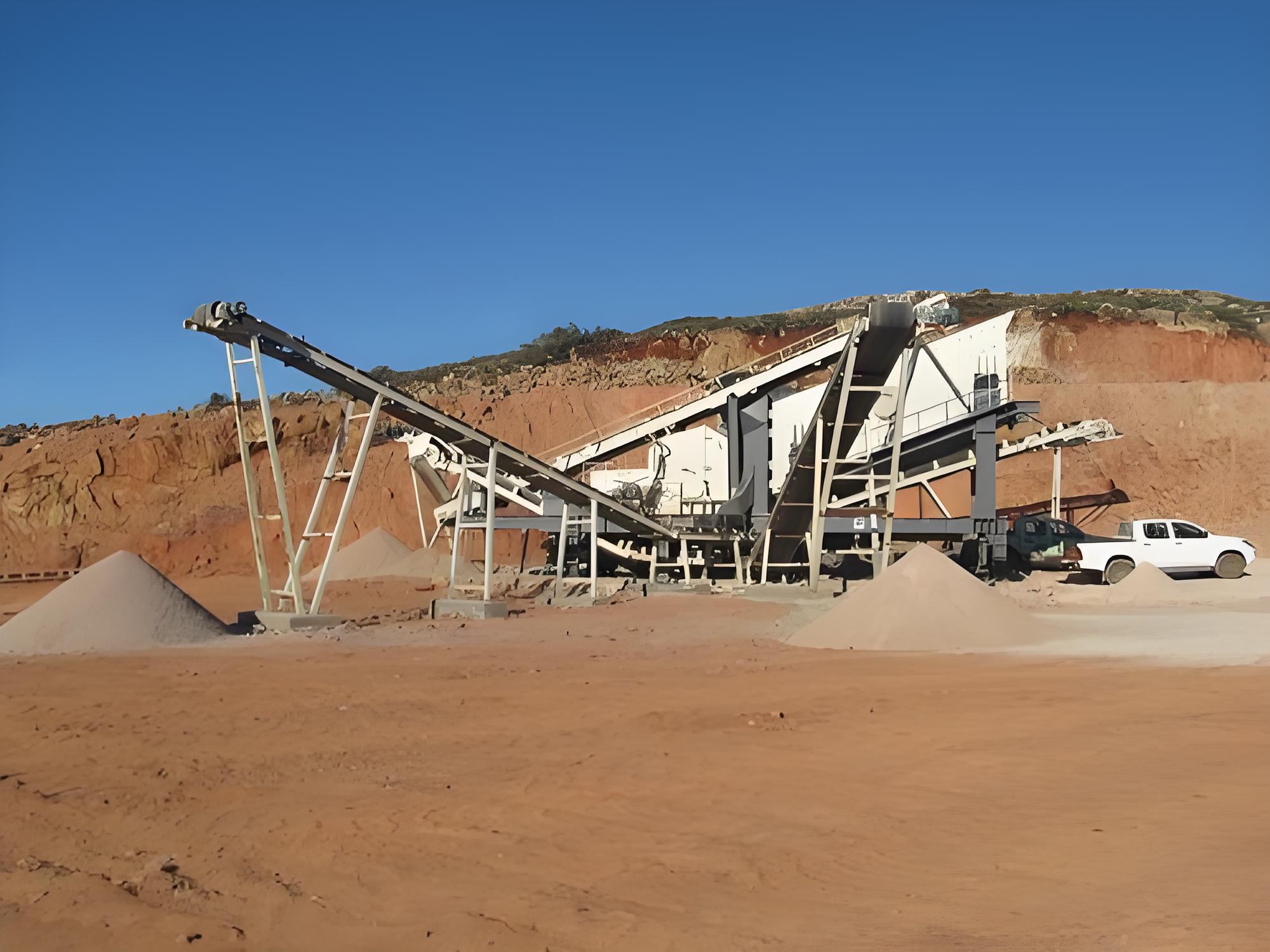
The YK Series is deployed across quarry, mining, and recycling operations to classify material into finished product fractions, support closed-circuit crushing, and prepare feed for downstream separation processes.
Common Questions About YK Circular Vibrating Screens
Ready to Size Your YK Vibrating Screen?
Provide your feed material type, target output fractions, and required hourly capacity — our team will recommend the right model and screen configuration.
Request a Quote →