VSI Sand Makers
Professional Manufactured Sand Making & Aggregate Shaping
As natural sand resources dwindle and environmental regulations tighten on river dredging, manufactured sand produced by VSI vertical shaft impact crushers has become the industry standard for ready-mix concrete, asphalt, and construction aggregate. Rock-on-rock or rock-on-anvil — optimised for granite, basalt, limestone, river pebble, and recycled material.
Engineering Behind the VSI
Deep-Cavity Rotor — The Core of Consistent Sand Quality
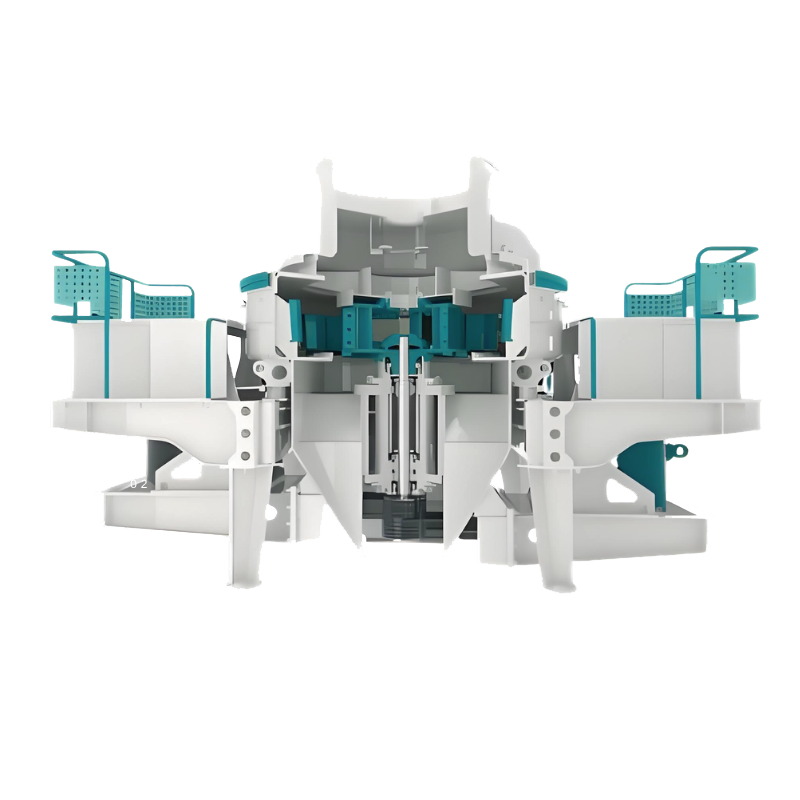
The deep-cavity rotor design maximises material throughput by providing a larger acceleration zone. Feed material enters through the centre feed tube and is distributed by the splitter cone into the rotor ports, where it is accelerated to high velocity before ejection. Rotor speed is adjustable to control output gradation — higher speed increases sand fines content; lower speed favours coarse aggregate for shaping applications. The crushing chamber is lined with replaceable peripheral guard plates that form the material bed in rock-on-rock mode, or can be swapped for anvils in rock-on-anvil mode.
Adjustable Rotor Speed
Variable-speed drive allows real-time tuning of output gradation — from coarse shaping sand to fine manufactured sand meeting concrete specifications.
Replaceable Wear Parts
Throw-head inserts, protector plates, and peripheral guard plates are individually replaceable — worn parts can be flipped or swapped without rotor removal, reducing downtime and consumable cost.
Dynamic Balance Design
Precision-balanced rotor minimises bearing load and vibration, extending bearing life and reducing foundation requirements.
Dual Feed Modes
Full centre feed for rock-on-anvil sand production; centre feed with cascade peripheral feed for rock-on-rock combined mode — the cascade stream forms a protective material bed around the chamber.
Dual-Motor V-Belt Drive
Twin motors with auto-tensioner maintain constant rotor speed even under variable feed conditions, ensuring consistent output quality.
Heavy-Duty Steel Frame
Q345 welded frame with reinforced base pads handles sustained high-energy impact loads without fatigue cracking.
Hydraulic Cover Opening
One-button hydraulic system opens the top cover for direct access to the rotor and chamber — reduces maintenance downtime by up to 30% compared to manual bolt-on covers.
Dual-Pump Oil Lubrication
Forced-circulation lubrication station with dual oil pumps for redundant supply, temperature monitoring with automatic alarm, and integrated oil cooling to keep bearing temperature rise within 25 °C for extended bearing life.
Dual-Motor Drive with Hydraulic Cover — Fast Maintenance Access
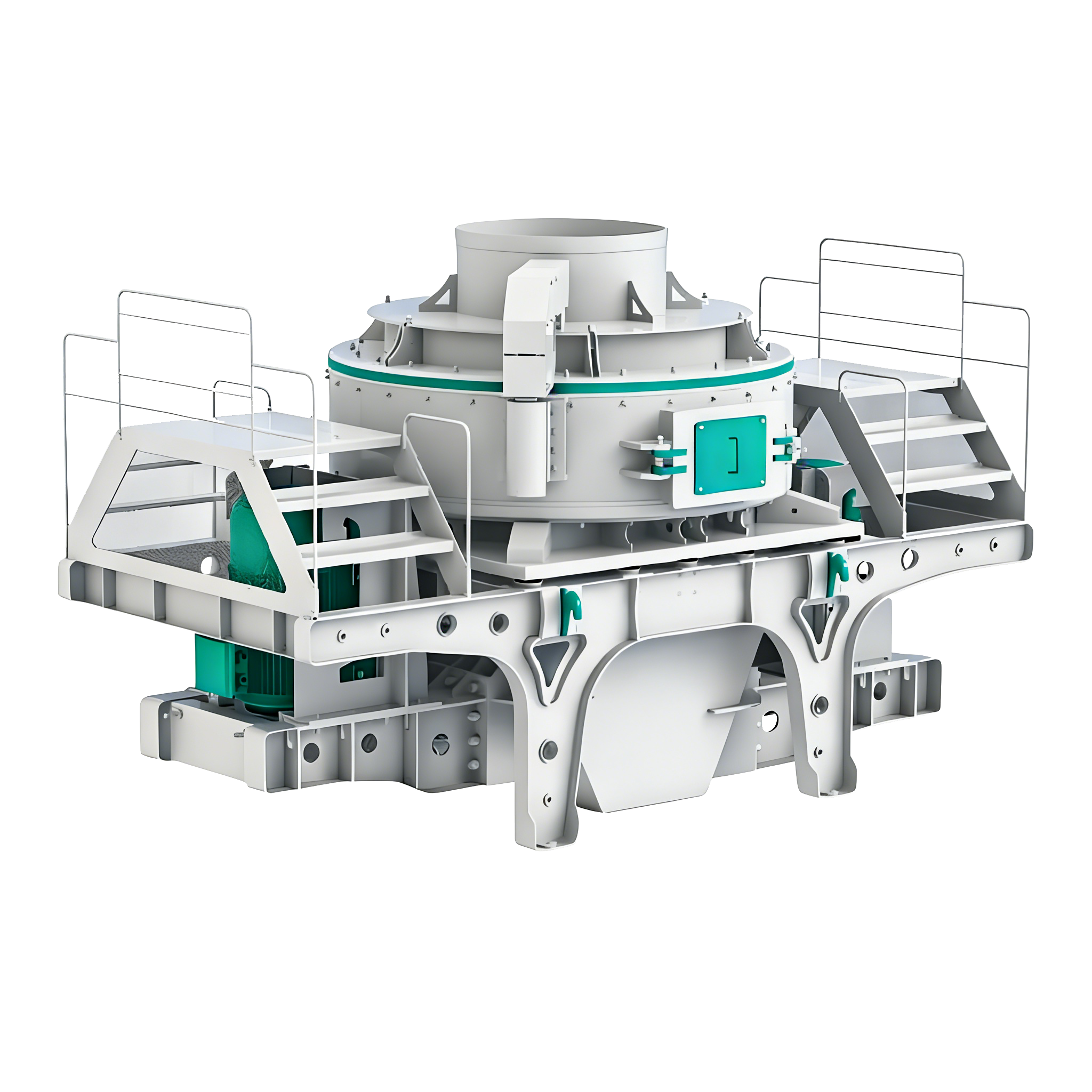
The VSI is driven by dual motors via V-belts to a heavy-duty vertical countershaft and bearing assembly, delivering stable high-torque rotor operation under continuous feed. The main frame is fabricated from Q345 structural steel with stiffening ribs for rigid support under sustained high-speed impact loads. A hydraulic opening system on the cover allows single-operator access to the rotor and crushing chamber for inspection and wear part replacement — no crane or manual lifting required.
Rock-on-Rock or Rock-on-Anvil — Two Modes, Two Strengths
The VSI crushing chamber supports two distinct modes determined by the peripheral liner configuration. Rock-on-rock uses a self-formed material bed as the impact surface; rock-on-anvil uses fixed metal anvils. The right choice depends on material hardness, abrasiveness, and whether the target is premium shaping or maximum sand output.
Best Particle Shape, Lowest Wear — Ideal for Hard Abrasive Rock
Material is accelerated by the rotor and ejected at high velocity into the crushing chamber, where it impacts a self-formed bed of the same material lining the peripheral guard plates. There is no direct metal-to-rock contact during crushing, which dramatically reduces liner wear and eliminates iron contamination in the product. The repeated inter-particle collision produces highly cubical particles with minimal needle and flaky content — making this the preferred mode for aggregate shaping and premium manufactured sand from hard abrasive rock such as granite, basalt, and quartzite. A slight trade-off is that fines content may be marginally higher than rock-on-anvil.
Higher Throughput, Tighter Grading — Ideal for Sand Production
In this mode, the peripheral guard plates are replaced with fixed metal anvils. Material ejected from the rotor strikes the anvils directly, delivering a more aggressive impact that breaks material faster and produces a tighter, more consistent particle size distribution. This mode is best suited for medium-hardness or low-abrasiveness materials such as limestone, dolomite, and recycled concrete aggregate, where high sand output and consistent grading are the priority. The trade-off is higher wear on the anvils and a slightly less optimal particle shape compared to rock-on-rock.
VSI Series — Specifications
Each model lists both sanding and reshaping throughput. All models support rock-on-rock and rock-on-anvil modes.
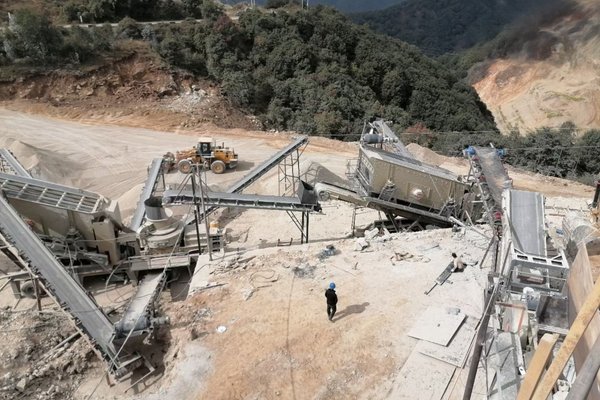
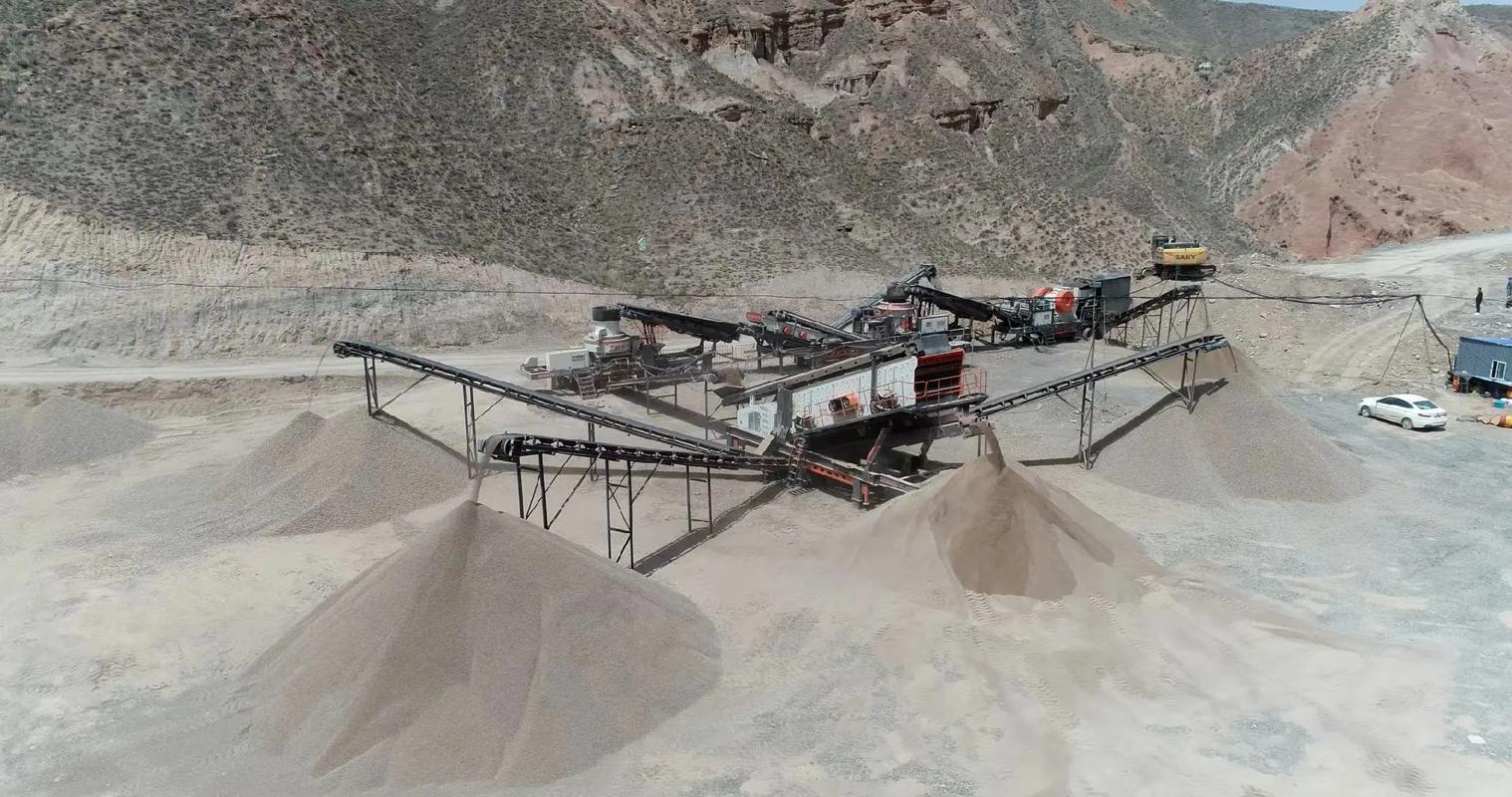
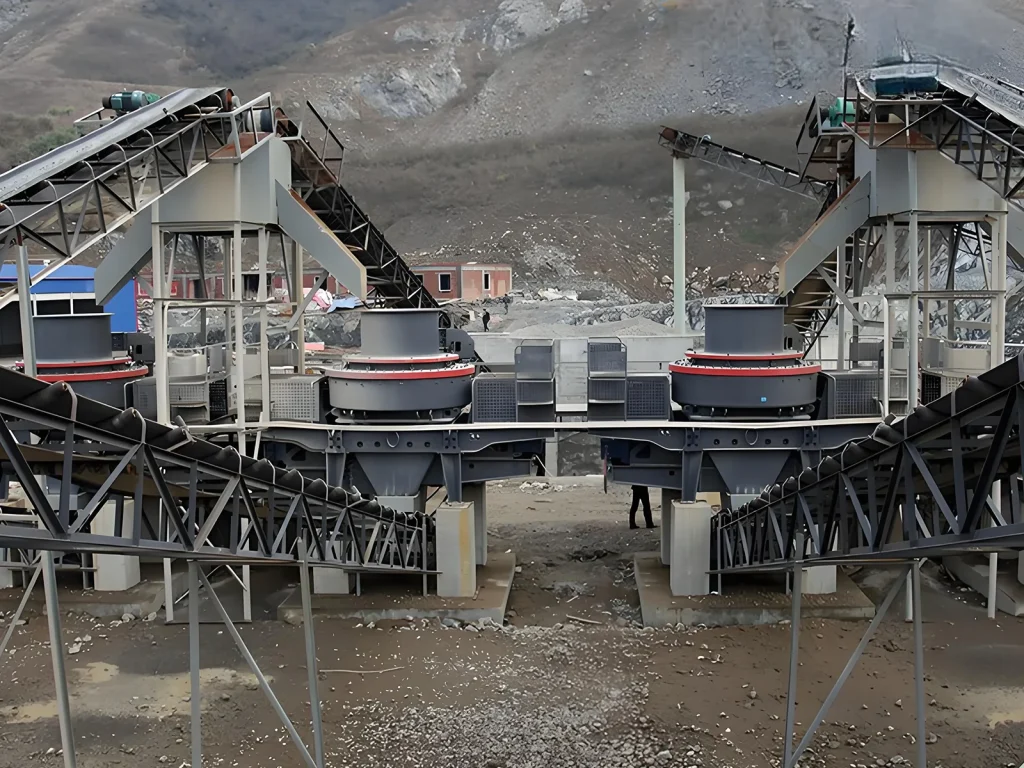
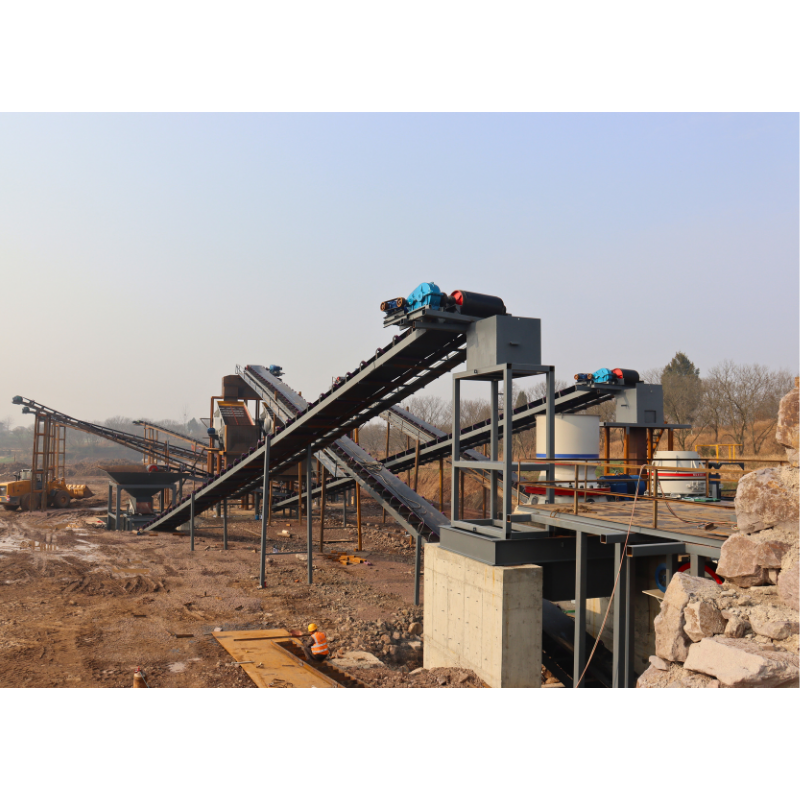
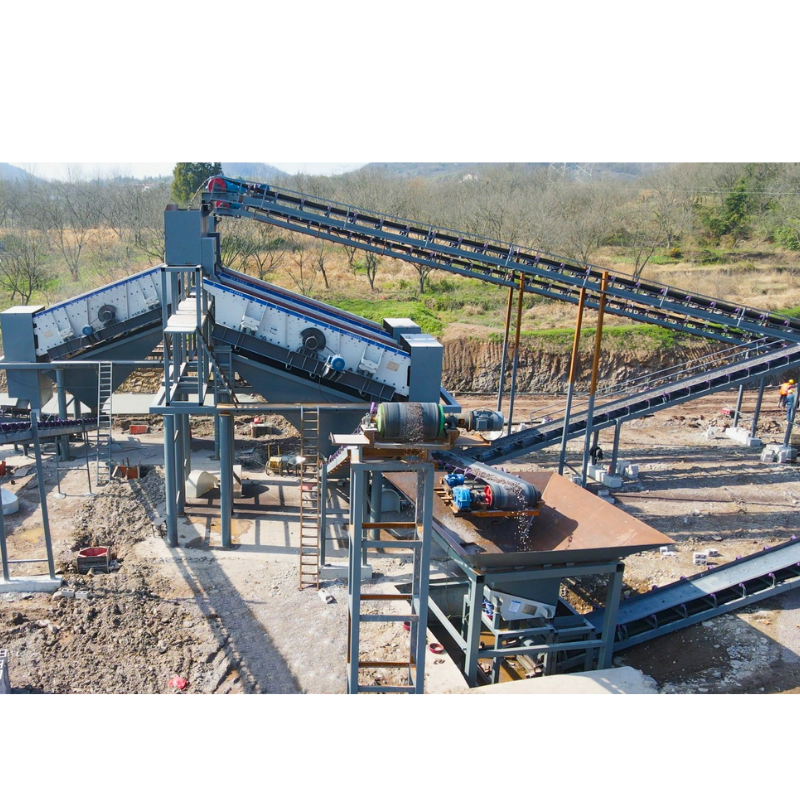
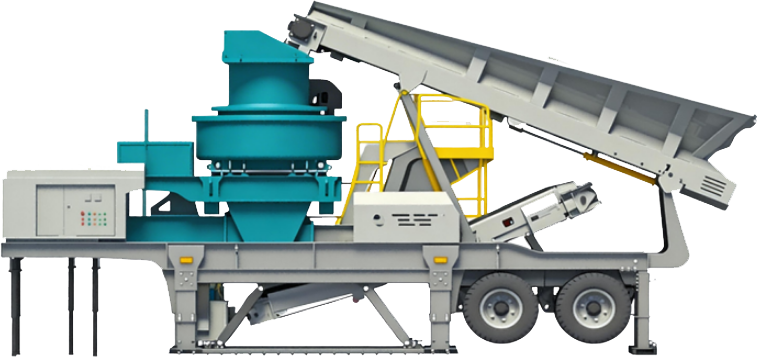
VSI Sand Makers in Operation
Where VSI Sand Makers Deliver the Most Value
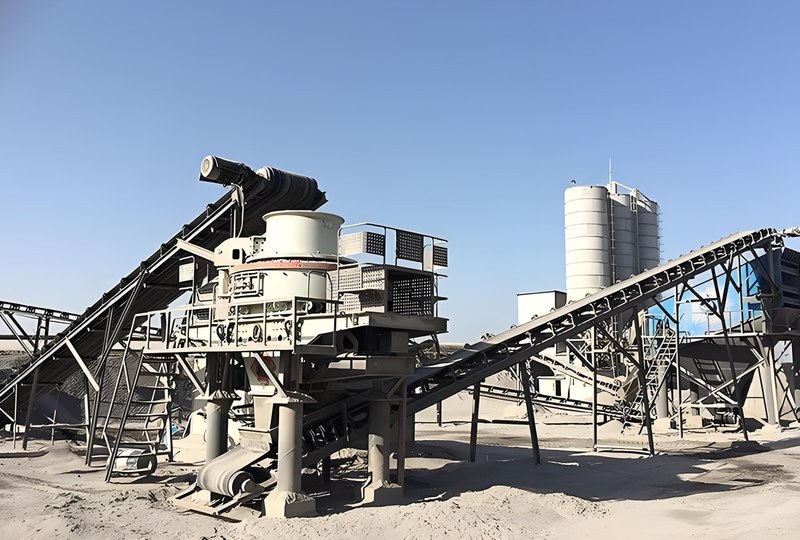
VSI crushers are the standard choice for any line requiring manufactured sand, cubicised aggregate, or controlled fines. With natural river sand supplies declining globally, VSI-produced manufactured sand has become essential for ready-mix concrete plants, highway and railway construction, hydraulic engineering, and municipal infrastructure projects.
Complete the Sand Making Line
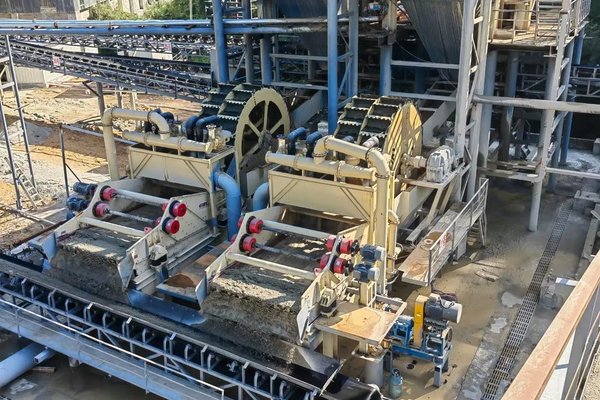
The VSI handles crushing and shaping — but a complete manufactured sand line also requires downstream washing and classification. A sand washer removes excess fines, clay, and dust from the VSI output, producing clean, well-graded sand that meets the moisture and cleanliness specifications of concrete and asphalt standards. SUNREX supplies both wheel and spiral sand washer types to match your line capacity and product requirements.
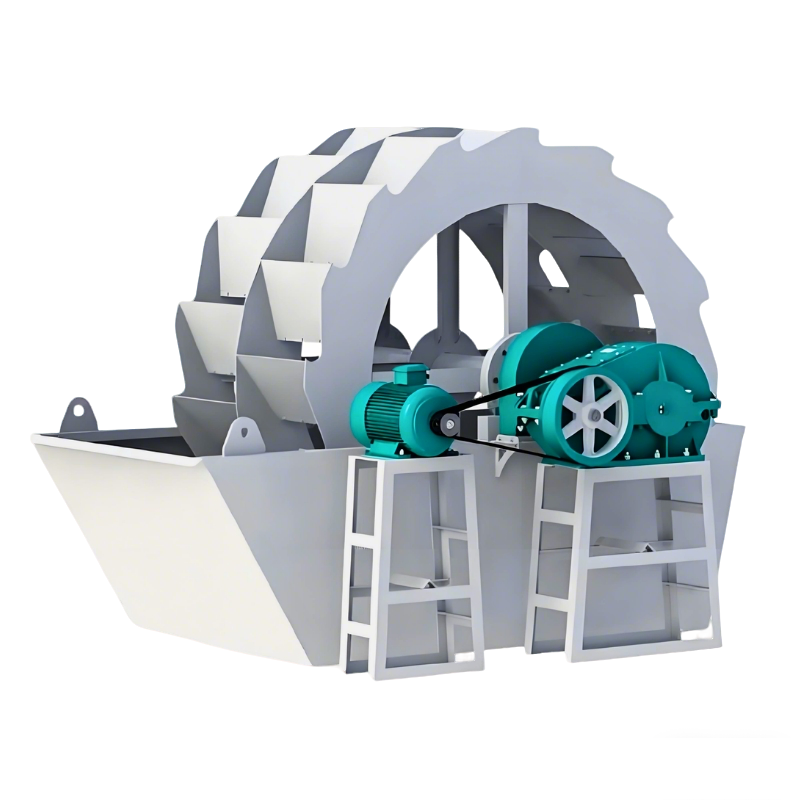
Wheel Sand Washer (XD Series)
Bucket-wheel design for gentle washing of manufactured sand. Removes clay, silt, and excess fines. Low power consumption and simple maintenance — ideal for medium-scale sand lines.
Enquire →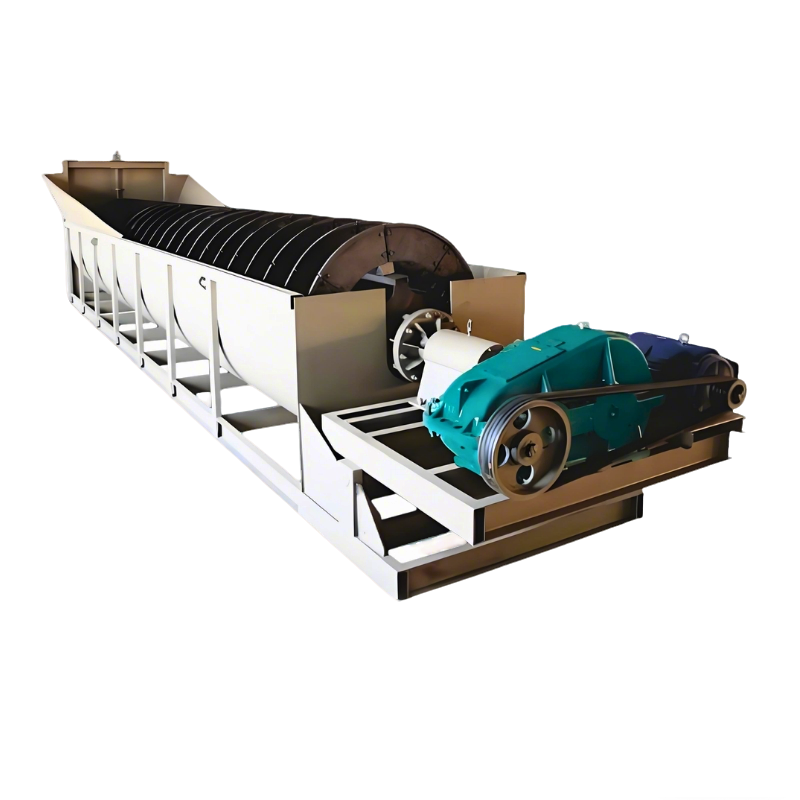
Spiral Sand Washer (XL Series)
Screw-type classifier for high-capacity washing and grading. Better fines recovery and dewatering efficiency than wheel types. Suitable for large-scale manufactured sand production lines.
Enquire →Common Questions About VSI Sand Makers
Rock-on-anvil: The peripheral guard plates are replaced with fixed metal anvils. Material ejected from the rotor strikes the anvils directly, delivering a more aggressive breakage that produces higher throughput and tighter, more consistent grading. Best suited for medium-hard or low-abrasion materials like limestone and dolomite. The trade-off is faster anvil wear and a marginally less optimal particle shape.
Start Your Manufactured Sand Project Today
Tell us your output target and material type — our engineering team will size the VSI and recommend the complete sand making line configuration.
Request a Quote →